The sector
Automotive and mobility · Founders’ track record · Lincoln
Lincoln · Quiet Flight, translated into the interface
A design philosophy, made operable on three screens. Cluster, head-up display, and center stack, delivered to production.
3 in-car surfaces2 brands on one systemJ.D. Power APEAL Award
062104km/h
ReadyElectric DriveCruiseRange · 512 km418 km306 km
HUD
at the eye line
at the eye line
Quiet FlightThe cabin settles.The important thing is the visible thing.Quiet until it matters.
Luxury in a car is now judged against the phone in the driver’s pocket.
Lincoln has a design philosophy which is genuinely its own. Quiet Flight is calm, unhurried, and confident, and it works beautifully in sheet metal. Translating it to a screen is harder, because a screen wants to talk.
Drivers arrive with consumer technology expectations and no patience for a system which explains itself. The interface had to feel premium without becoming busy, and modern without diluting a brand which trades on stillness.
Embedded with Lincoln’s own HMI and design teams.
Multi-week co-creation sprints with engineering, user experience, and executive stakeholders. Interactive prototypes across the head-up display, the cluster, and the center stack, tested for legibility and interaction flow in simulators and then on the road.
Motion carried the philosophy where language could not.
Simulator sessions kept converging on the same finding: what reads as luxury on a screen is not the layout. It is the timing. Calm transitions made the system feel composed even when it was doing a great deal.
Calm is a feature you can ship.
One architecture, three surfaces, two brands.
The bet: a unified interface architecture across cluster, head-up display, and center stack, with motion as the carrier of the brand and a component set built once for Lincoln and Ford together. The philosophy ships as a system, not as a styling pass.
Calm at the eye line, at speed.
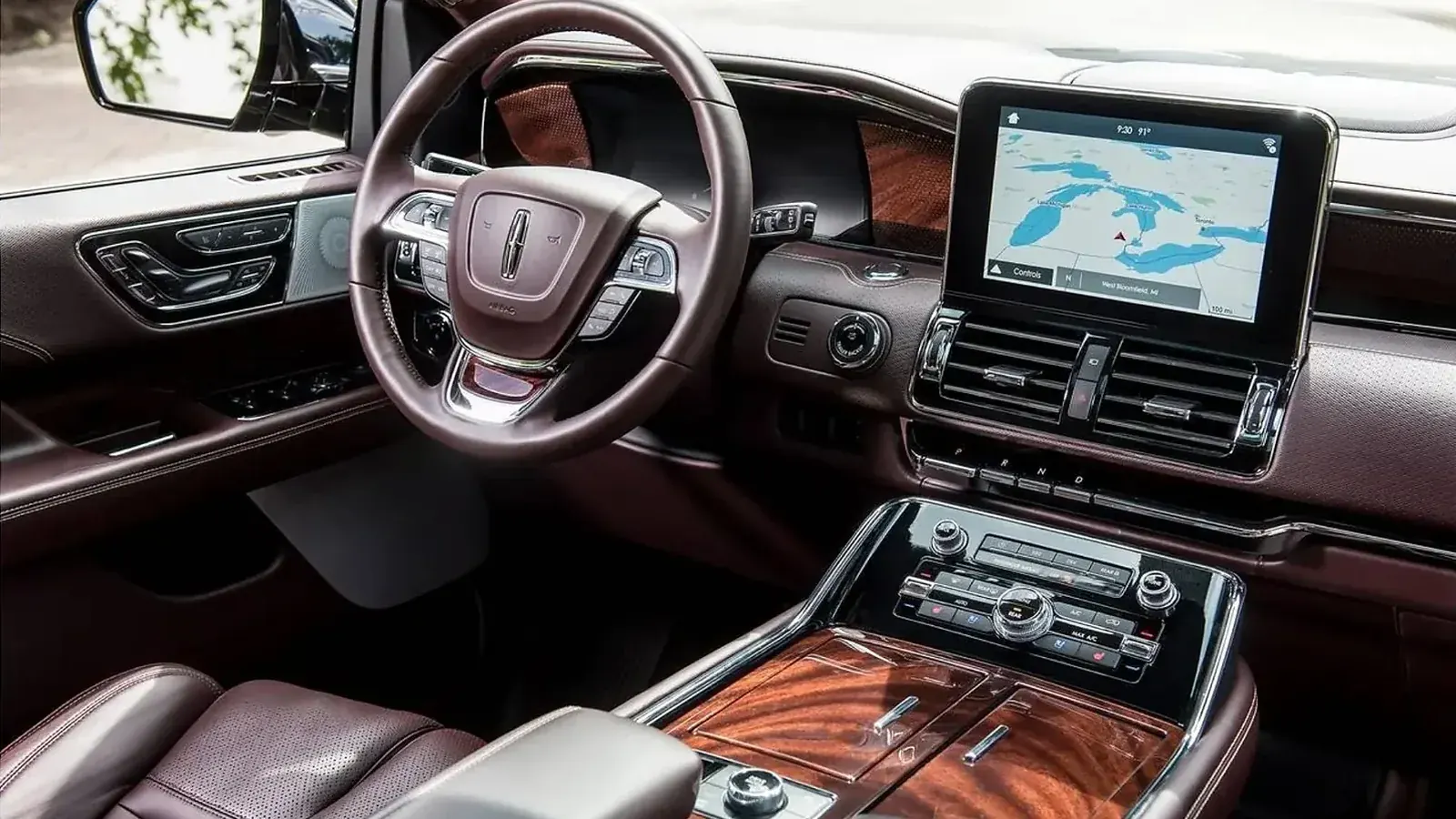
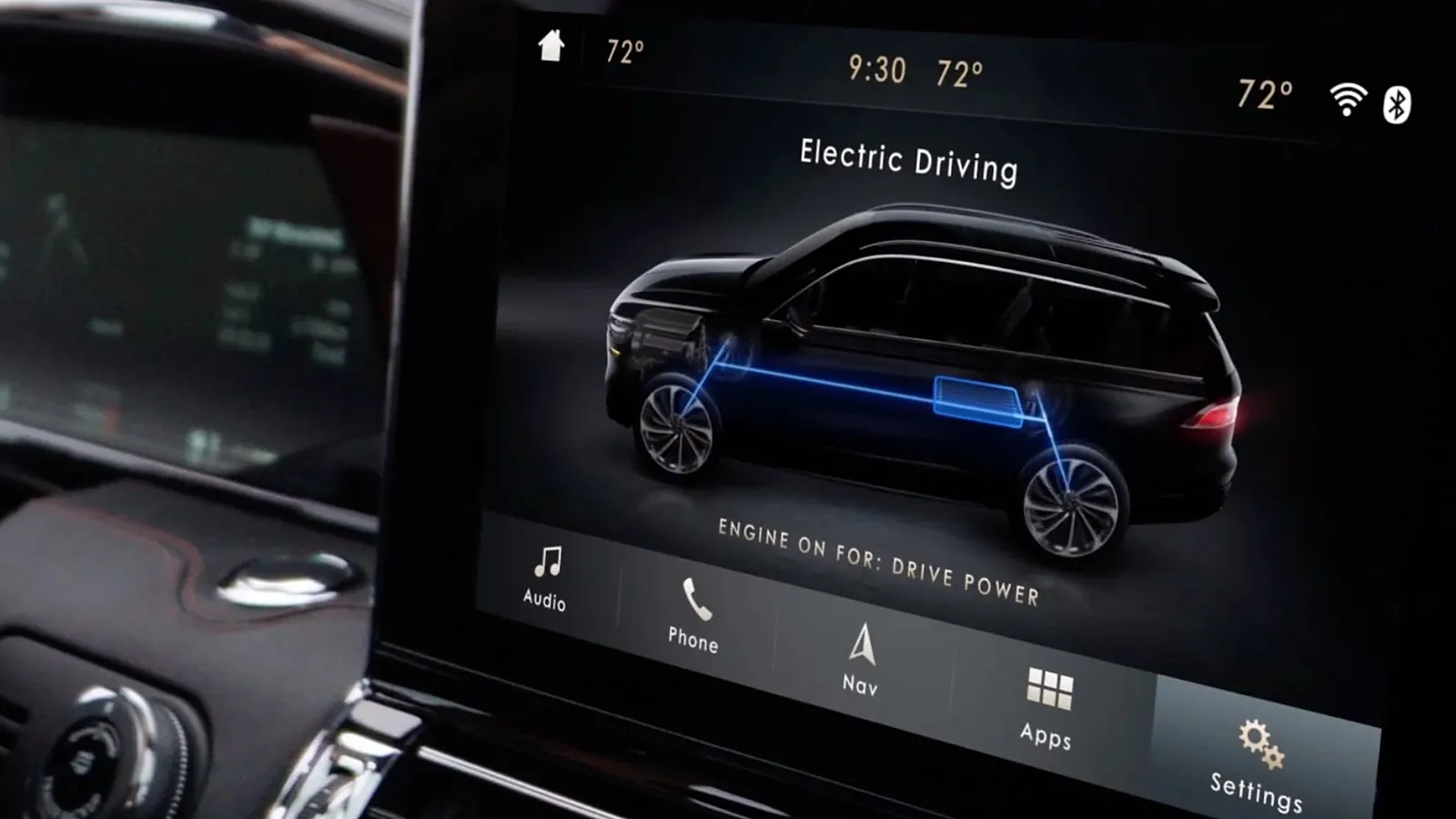
The defined experience keeps the important thing the visible thing: information at the eye line which stays quiet until it matters, ambient motion synchronized to the drive, and multisensory cues where a glance is the wrong instrument. The car stays a Lincoln when the screen comes on.
A production platform, not a concept film.
Unified interface architecture across all three surfaces. Driver-centric information design, so the important thing is the visible thing. Motion-driven feedback with ambient animation and lighting synchronization. Multisensory cues where a glance is the wrong instrument.
The component set is production-ready and scalable, architected to serve Lincoln and Ford’s shared design system, and structured to carry forward into electric and autonomous rollouts rather than be replaced by them.
Cluster
The important thing is the visible thing.
Head-up display
Information at the eye line, quiet until it matters.
Center stack
Depth without busyness, premium without explanation.
Motion feedback
Ambient animation and lighting, synchronized to the drive.
Co-creation
Multi-week sprints with engineering, UX, and the executives.
Two brands
One component set, architected for Lincoln and Ford.
Shipped, scaled, and recognized in the segment.
3
in-car surfaces under one interface architecture
2
brands, Lincoln and Ford, on one component system
The work reached production, which is the only result an interior system can really claim. The interface shipped in the Aviator and the Navigator, and the platform was deployed across the Lincoln lineup. J.D. Power recognized the program with top marks for HMI satisfaction in the luxury segment, through its APEAL Award. Beyond the award, the durable outcome is a component system which holds Lincoln’s character while scaling across two brands and a global design ecosystem.
Record. Lincoln, with Ford’s shared design system.
Work led by Formist’s founders in prior practice.
Discipline. Human-machine interface · motion design · design systems.
The point. A philosophy is a claim until it ships. Quiet Flight had to hold at speed, in daylight, on a screen meant for glances.
The system, in the car.
The future of the cabin is an interface which stays quiet.
Bring the ambition. Start a conversation.