The sector
Health and medical · Founders’ track record · Siemens Healthineers · 2023
Siemens Healthineers · Point-of-care made connected
Blood gas, urinalysis, glucose, and lipids, on a single system. Research with over 1,000 medical professionals, from the emergency room to the lab.
1,000+ clinicians researched4 test types unifiediF Design Award
Atellica DCAOne interface
WardLabClinic
Blood gasresult
Urinalysisresult
Glucoserunningrunningresult
Lipidsqueuedrunningresult
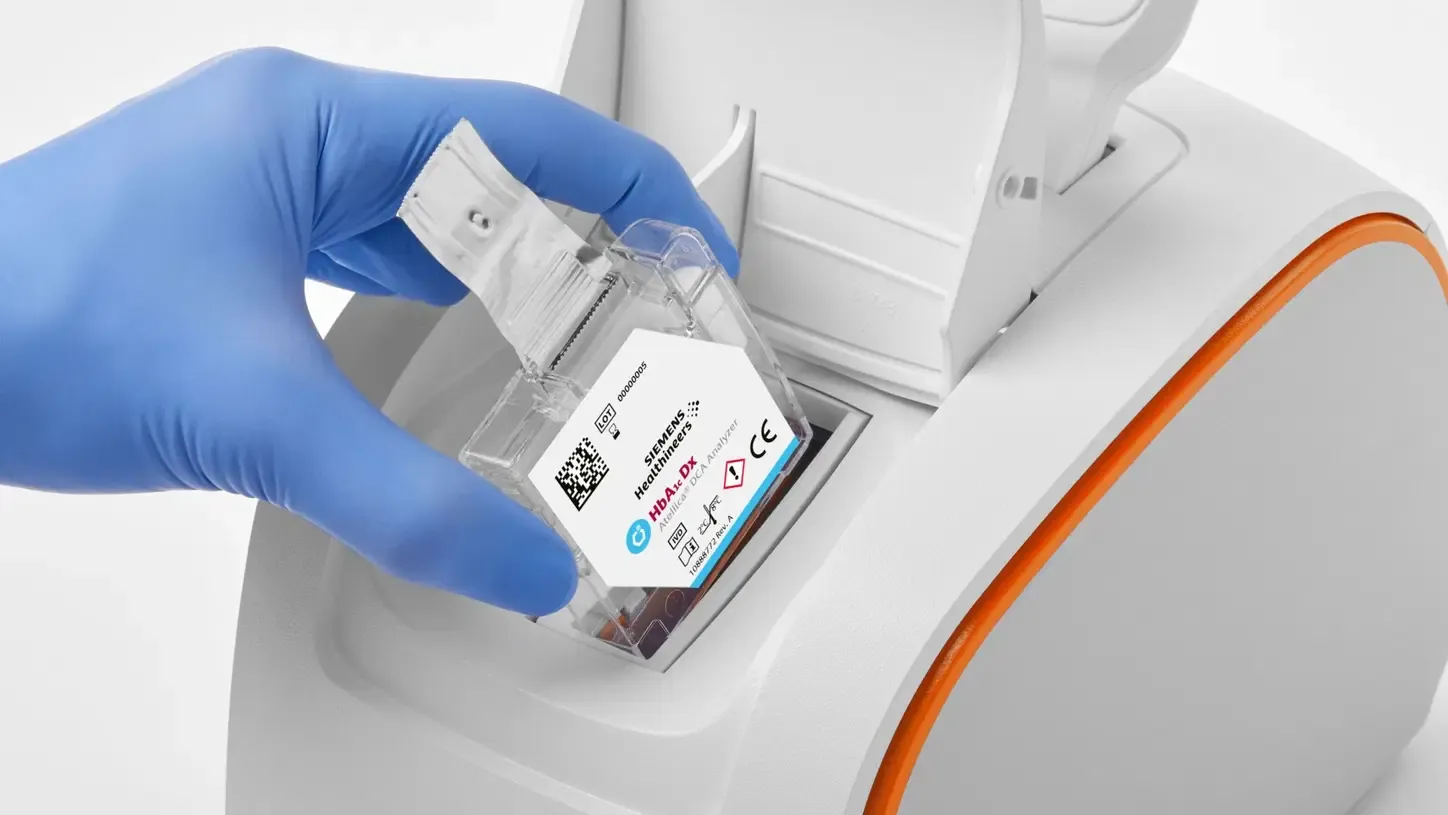
Cartridge accepted. One path to a result.Operator error anticipated: none.Four tests, one interface, read together.
A clinician is waiting on four machines which do not talk.
Critical care, chronic care, and the laboratory each run their own workflow, their own sample types, and their own test engines. Blood gas here, glucose there, lipids somewhere else again. The fragmentation is not an inconvenience, it is a delay in front of a treatment decision.
Siemens Healthineers needed one platform which adapts to all three environments, and uses the connection between them rather than adding another silo.
Over 1,000 medical professionals, across three very different rooms.
Ethnographic and quantitative research covered critical care teams, laboratory technicians, and chronic care specialists. The needs pulled in opposite directions: chronic care wants long-cycle support, an emergency team wants rapid and flexible diagnostics, and the lab wants throughput.
The root problem was the daisy chain.
Three rooms, three workflows, and a hallway of machines wired in sequence. The research kept returning to the same finding: the delay does not live in any one device. It lives in the handoffs between them, and handoffs are what a platform can remove.
Fewer steps between a clinician and an answer.
One system, configured per room, never three products.
The bet: unify the core workflows under a single interface and let modular components carry the differences. The ward, the lab, and the clinic get the same system wearing the right configuration, and the connection between environments becomes the feature the silos never had.
A result read together, at the point of care.
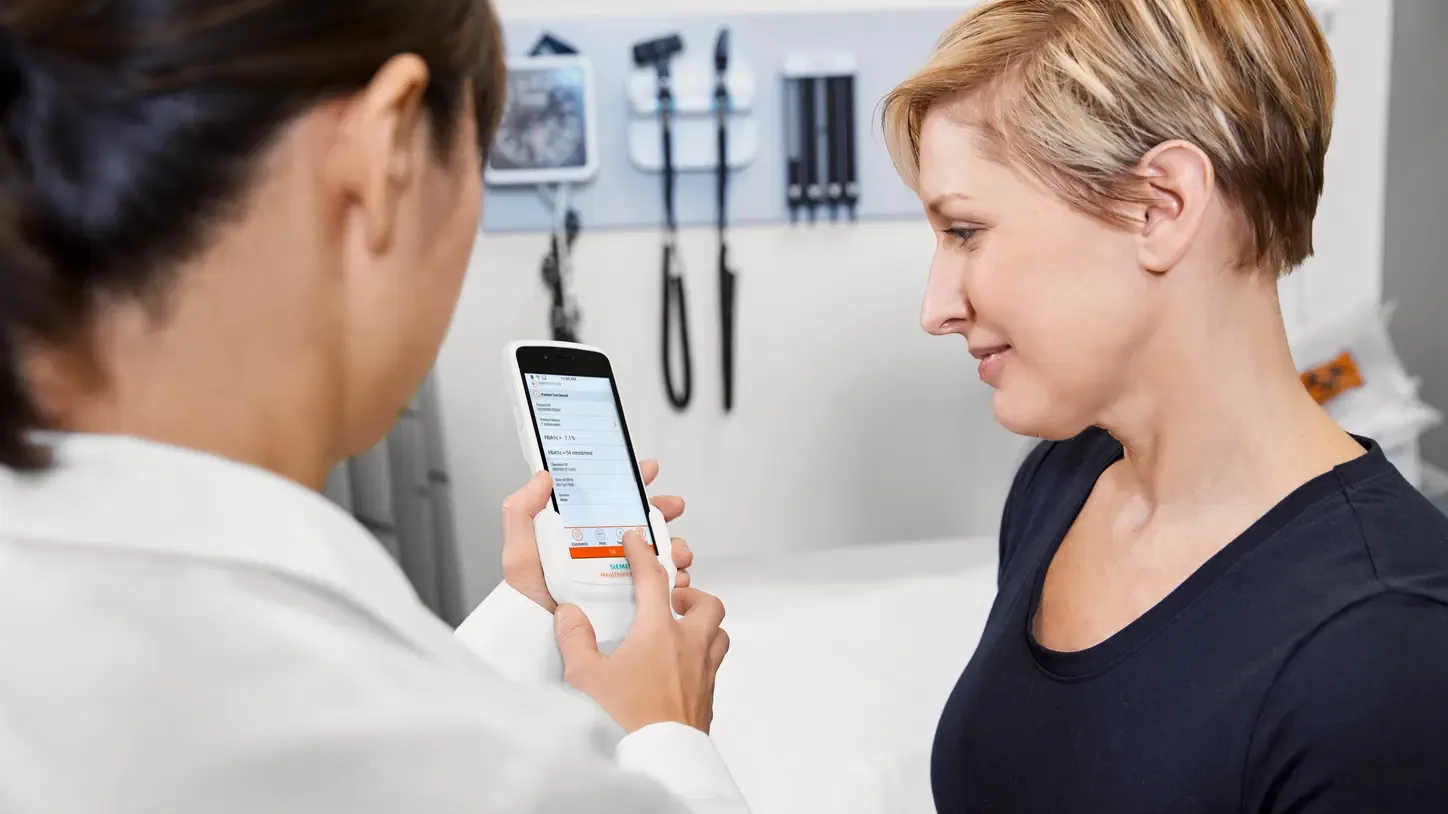
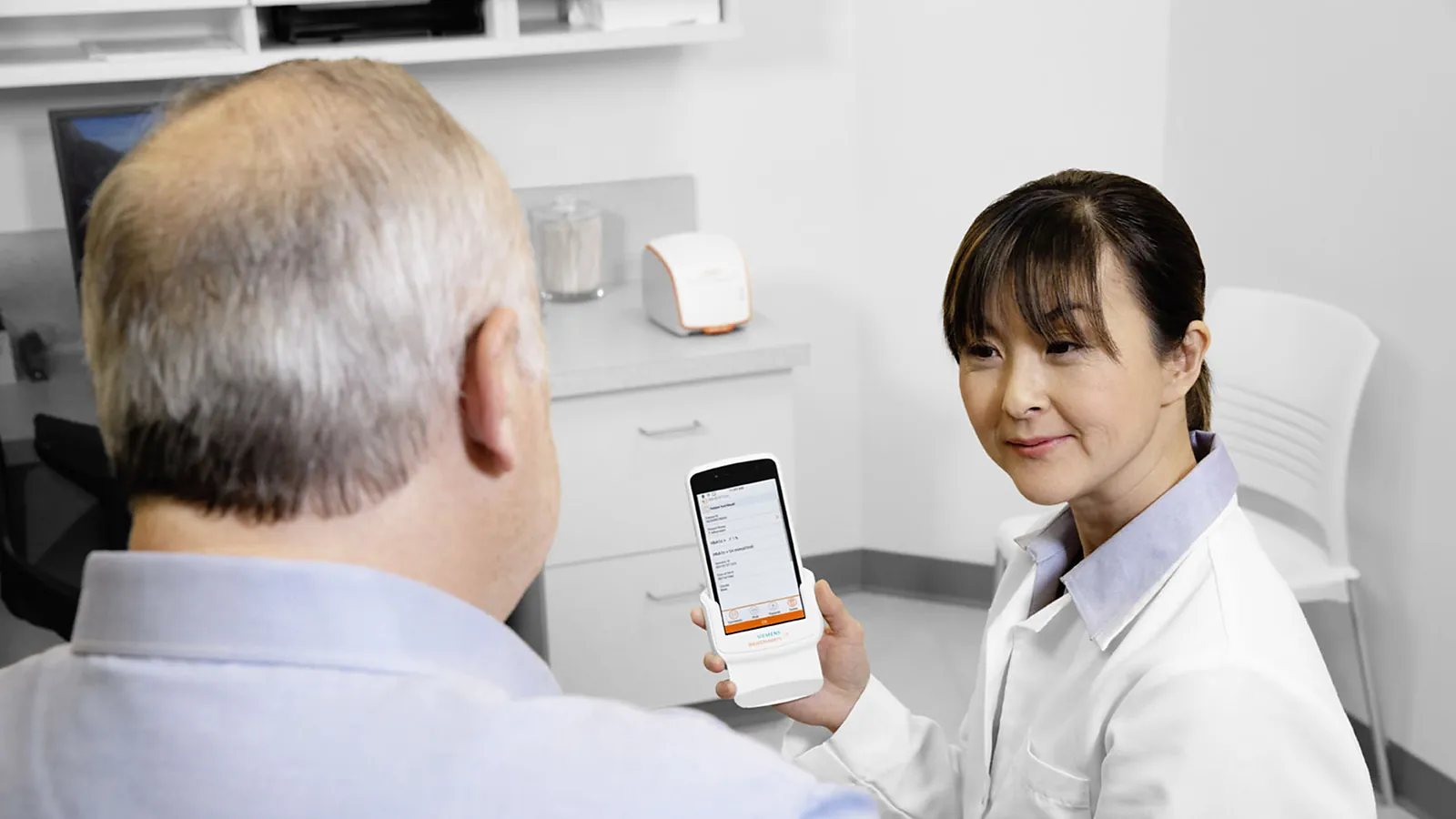
The defined experience puts the analyzer between clinician and patient rather than behind a counter: one cartridge, one path to a result, and an interface which anticipates operator error instead of blaming it. The device joins the conversation which decides the treatment.
The Atellica DCA platform, built to one interface.
Core workflows unified under a single interface, assembled from modular components so the same system can be configured for the ward, the lab, or the clinic. Integrated diagnostics bring blood gas, urinalysis, glucose, and lipid testing into one place.
Development ran as iterative prototyping against clinician feedback and usability testing, with machine learning models trained to anticipate operator error before it reaches the result.
Blood gas
Critical care speed, on the same system the lab trusts.
Urinalysis
One workflow where a silo used to stand.
Glucose and lipids
Chronic care’s long cycle, held in the same interface.
1,000+ clinicians
Ward, lab, and clinic researched until the needs stopped arguing.
Modular components
One system configured per environment, not three products.
Error anticipation
Models trained to catch operator error before the result.
Faster to result, with fewer places to go wrong.
1,000+
medical professionals researched, from the emergency room to the lab
4
test types in one place: blood gas, urinalysis, glucose, and lipid
3
environments under one interface: critical care, chronic care, and the laboratory
The Atellica DCA Analyzer holds an iF Design Award. The measurable clinical outcomes belong to Siemens Healthineers and the institutions running the system, and we do not restate them here as ours. What the design work is accountable for is the shape: one interface across environments which used to need three, and an error model which anticipates the operator rather than blaming them.
Record. Siemens Healthineers, Boston.
Work led by Formist’s founders in prior practice.
Discipline. Medical devices · diagnostics · clinical research.
The Atellica DCA, in the room.
The future of diagnostics is one interface in every room.
Bring the ambition. Start a conversation.