The sector
Industry and energy · Catalyst · 2026
Catalyst · Ten weeks to a scale decision
An inbound engine for industrial AI. Intelligent Core had the platform. Catalyst is the path which turns operator interest into a scale decision.
3 phases with gates6 entry tracks10 weeks to a scale plan
Catalyst · Cohort 01Week 2 of 10Week 6 of 10Week 10 of 10
01 · Fit Sprintin progressgate passedgate passed
02 · Acceptancewaitingin progressgate passed
03 · Scalewaitingwaitingscale plan
Readiness417288Baseline, W2↓12%Go/No-GoGo/No-GoGO
Enterprise AI dies in the pilot.
The pattern is familiar across industrial AI: interest without a KPI, pilots without gates, and proof nobody’s stakeholders trust. Every deal became bespoke consulting, every pilot open-ended, and the buying cycle longer than the budget which started it.
Intelligent Core needed inbound demand to arrive qualified, move on a clock, and end in a decision.
We mapped how industrial AI is actually bought.
Before a page was designed, we sat with the buying side: operators who had run pilots, and the IC team which had sold them. The same story returned every time. Interest arrives, a pilot starts, and nobody can say what would end it. The typical deal was a calendar of meetings in search of a verdict.
Buyers were not afraid of the product. They were afraid of the open end.
Every stalled deal shared one shape: no gate anyone could point to. The insight set the program: put the discipline of the platform into the way it is sold. Make the exit visible, and entering becomes easy.
Proof on a clock, or no next phase.
Sell the way the product works: measured, gated, governed.
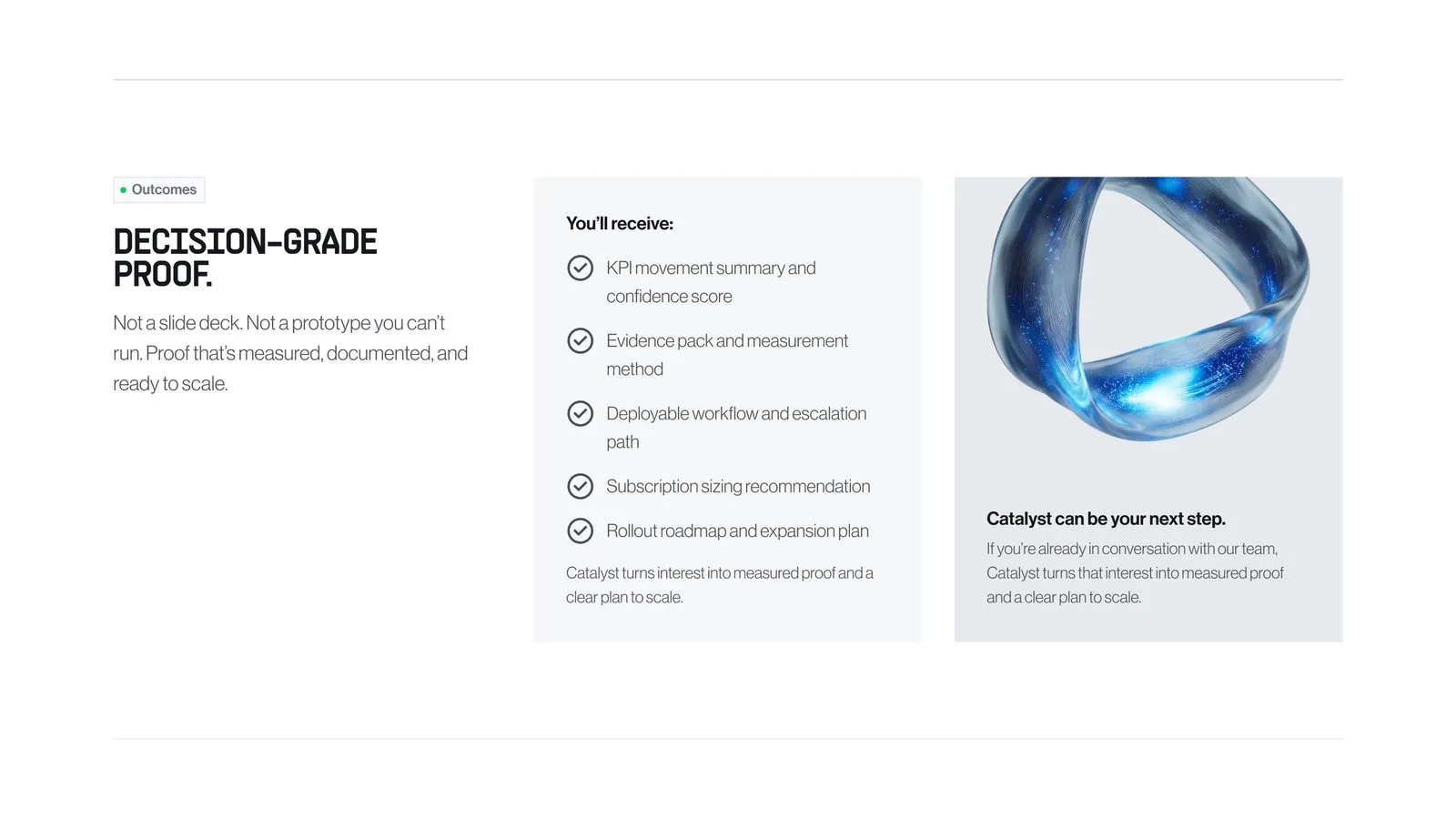
The program applies the platform’s own discipline to the way it sells. One workflow under real conditions. One primary KPI with a locked baseline. Three phases with gates, and advancement is not guaranteed.
Qualification is published as a fit and anti-fit list, which filters the pipeline before the first call, and credits replace open-ended scope so the economics stay honest on both sides. Baseline by week 2. Evidence by week 6. Scale plan by week 10.
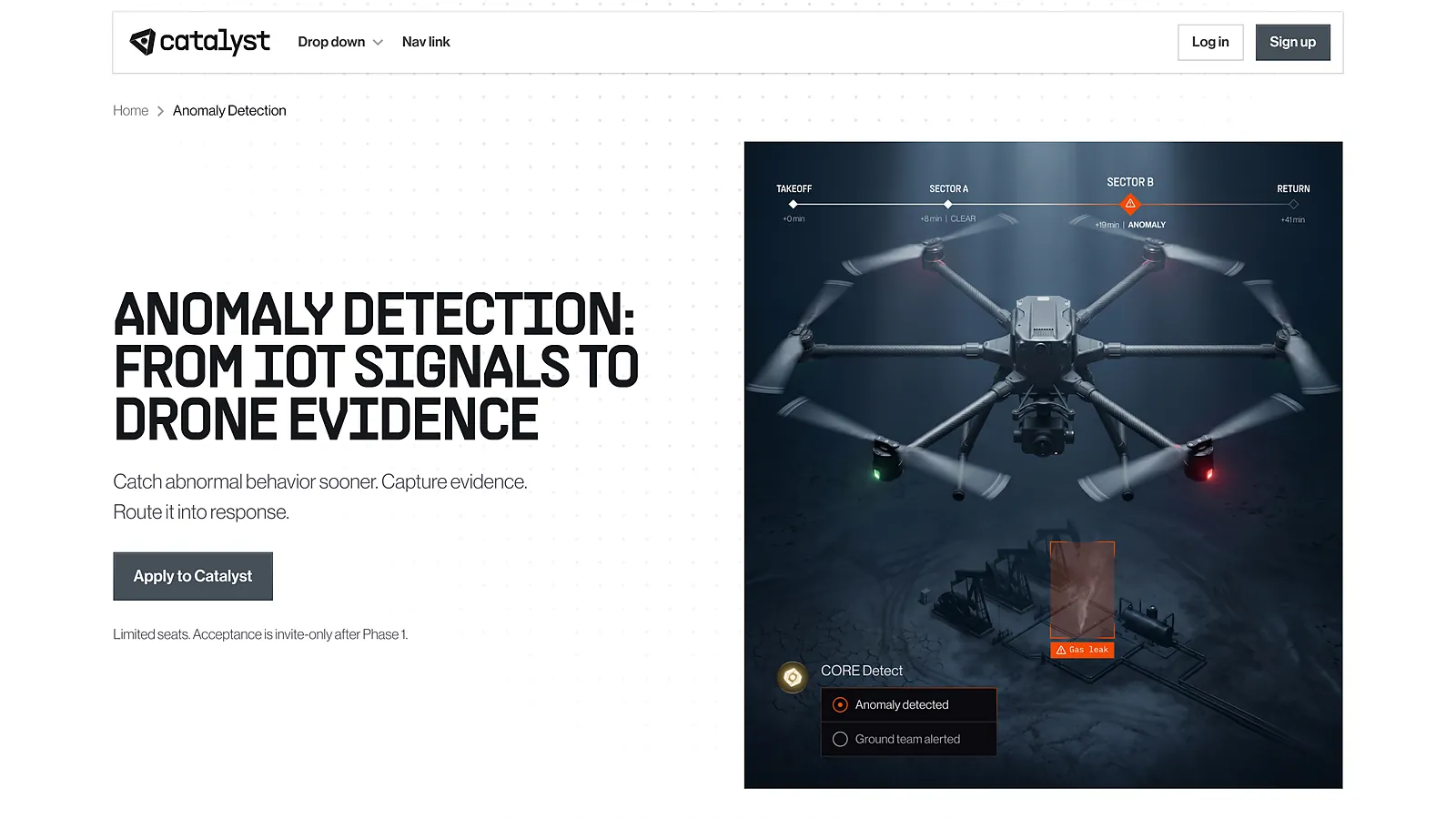
A program you can inspect before you enter.
The experience was defined from the buyer’s chair: a path which states its gates before the first call, credits instead of open scope, and a baseline set in week 2 which every later claim answers to. Nothing about the program asks for trust it has not earned.
Seven pages, six tracks, one clock.
Catalyst runs on a seven-page estate: a homepage which carries the whole system, and six track pages mapped to the CORE engines, from anomaly detection to custom workflows. Each track states what you will build, which engines power it, and which KPIs work well there, so a prospect self-selects into a scoped entry point.
Behind the pages sit the program instruments: the five-template toolkit, the readiness score, the Go/No-Go gate, and the credit ledger.
The identity carries the same argument. The Catalyst mark is an abstraction of the Intelligent Core mark, so the program and the platform read as one system rather than a campaign beside a product.
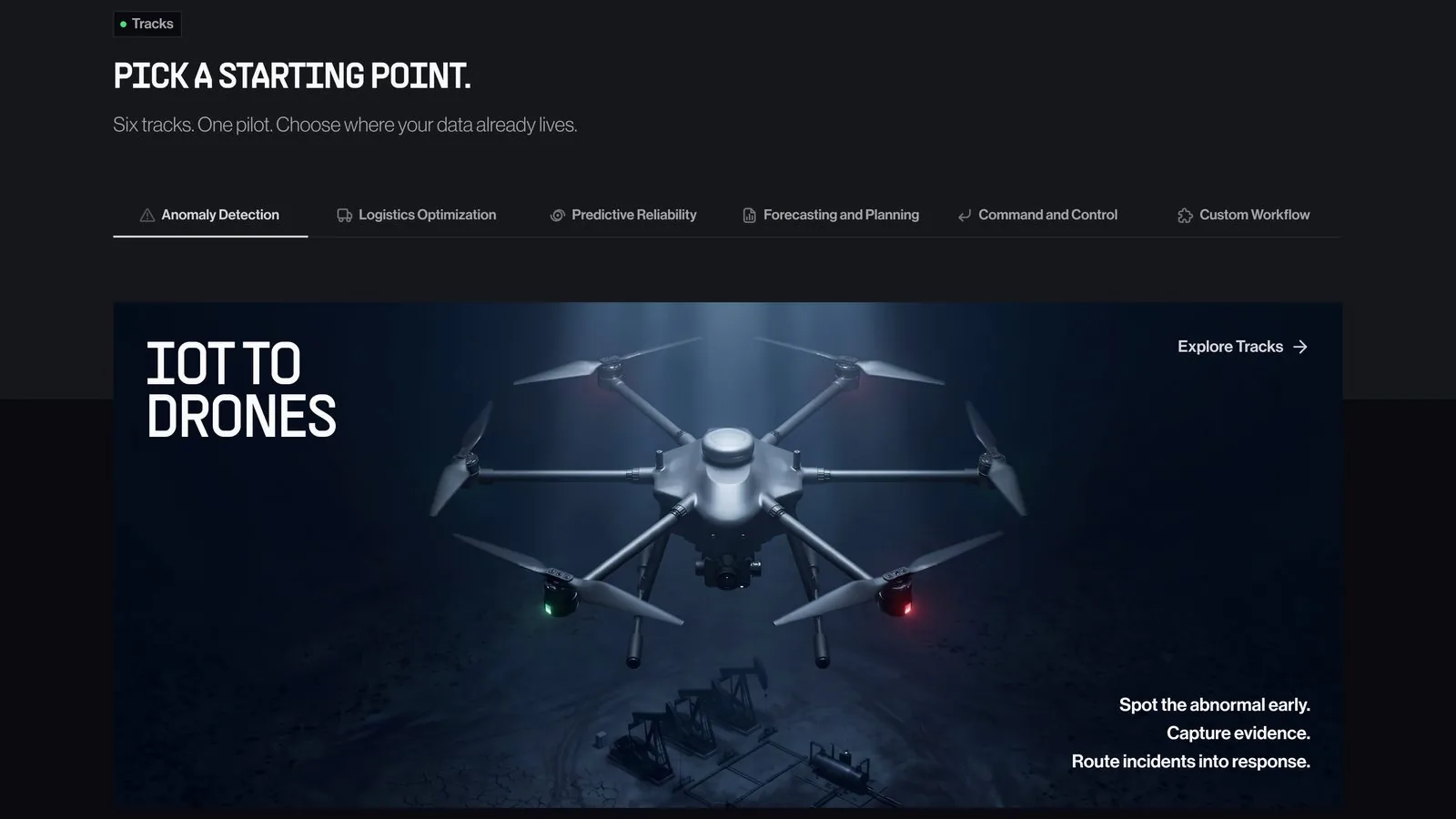
The site is the front door. The work happens on the board. Catalyst is not a microsite with a form on it. Behind a cohort sits a shared canvas, and the canvas is the program. Each phase carries the instruments a team fills in live with the operator, and the gate does not open until they are filled.
The canvases are named here. What a cohort writes on them stays with the cohort.
Phase 1 · Fit Sprint
- Problem, in six steps to one statement
- Personas
- Customer segmentation
- Synthesis
- Market and positioning, TAM to SAM to SOM
- Experiments
Phase 2 · Acceptance
- Value proposition canvas
- Adoption journey
- Internal operations
Phase 3 · Scale
- Business model canvas
Fit list
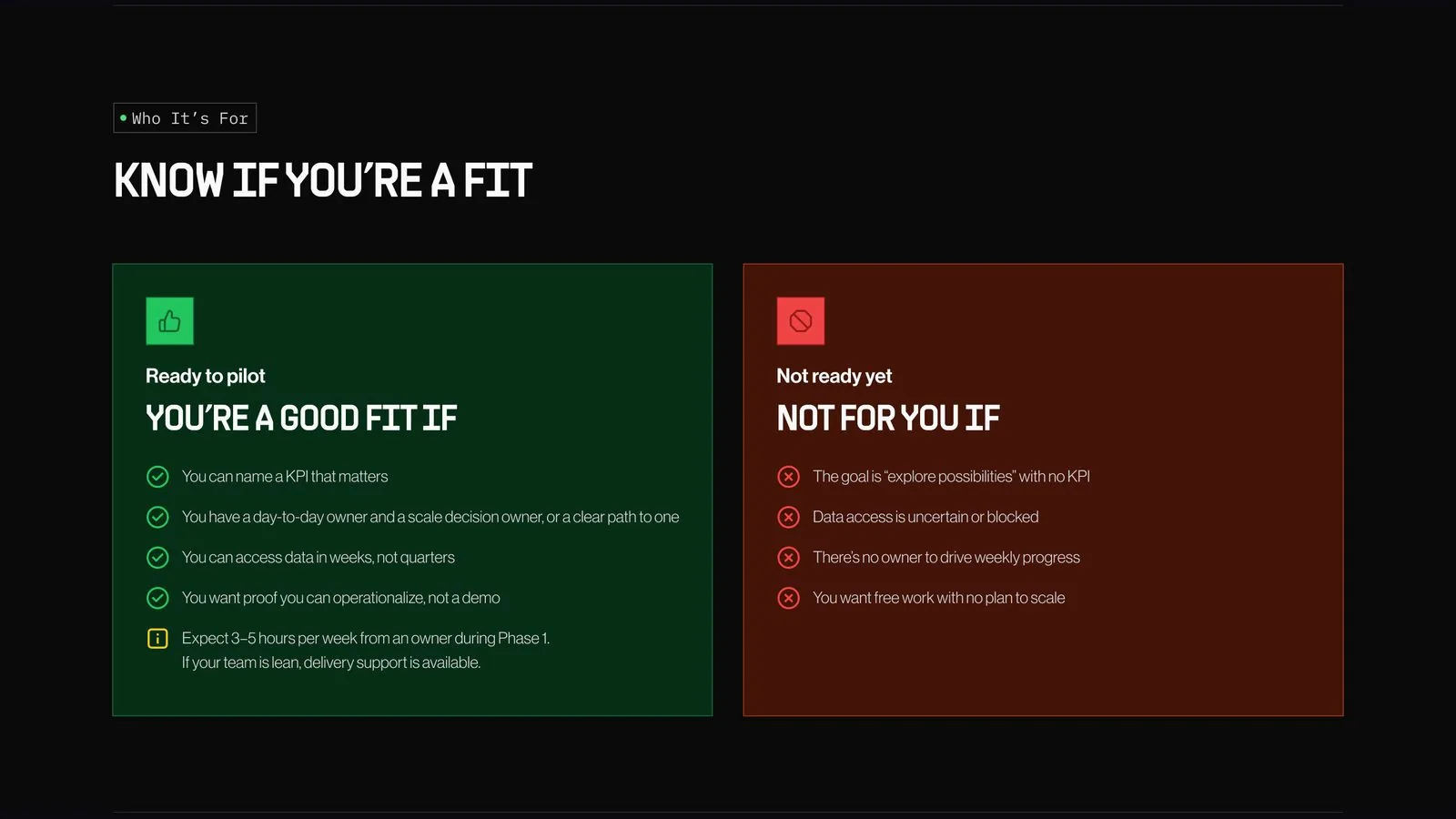
Qualification published up front, filtering the pipeline before the first call.
Readiness score
One number which says whether the operation is ready to move.
Baseline, week 2
Week 2 sets the number every later claim is measured against.
Phase gates
Three phases, each ending in a Go/No-Go a board can read.
Credit ledger
Credits replace open-ended scope, so the economics stay honest.
Scale plan
Week 10 ends in a decision, with the plan which carries it.
Delivered complete. Ready to run.
3
phases with gates, and advancement is not guaranteed
6
entry tracks, one per CORE engine
10
weeks from baseline to scale plan, as the program is built to run
Formist delivered the program complete: the seven-page estate, the six tracks, the three phases with their gates, and the instruments behind them. Intelligent Core holds a finished system.
The system is complete. The first cohort has not yet run. So what is shown here is the program as designed and built, down to the gates and the instruments behind them. We publish it that way because a program you can inspect is worth more than a number you cannot check.
Client. Intelligent Core.
Discipline. Industrial AI · sales architecture · program design.
Team. Robert Girvin and Tim Rowe. Roman Revazov and Yanina Olenych.
The instruments, in hand.
The fit list before the first call, the proof view at the gate, and the same program in a pocket on a plant floor. What a cohort holds at each moment of the ten weeks.
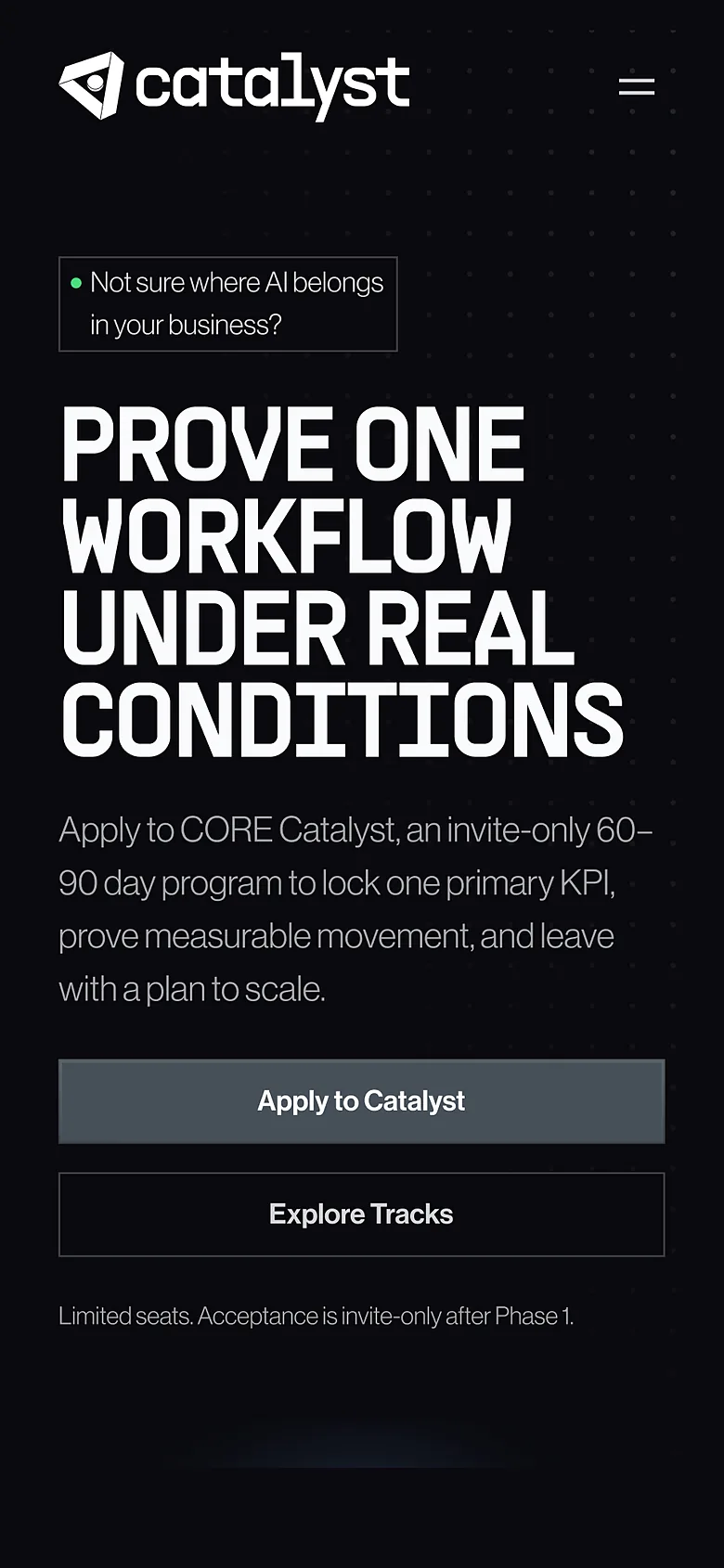
An operator reads this on a plant floor, on a handset, in gloves. The gates, the tracks, and the way in are the same ones the desktop carries. Nothing is deferred to a bigger screen.
The future of enterprise AI buying is an evaluation which ends in proof.
Bring the ambition. Start a conversation.